
An interview with Shannon Louis
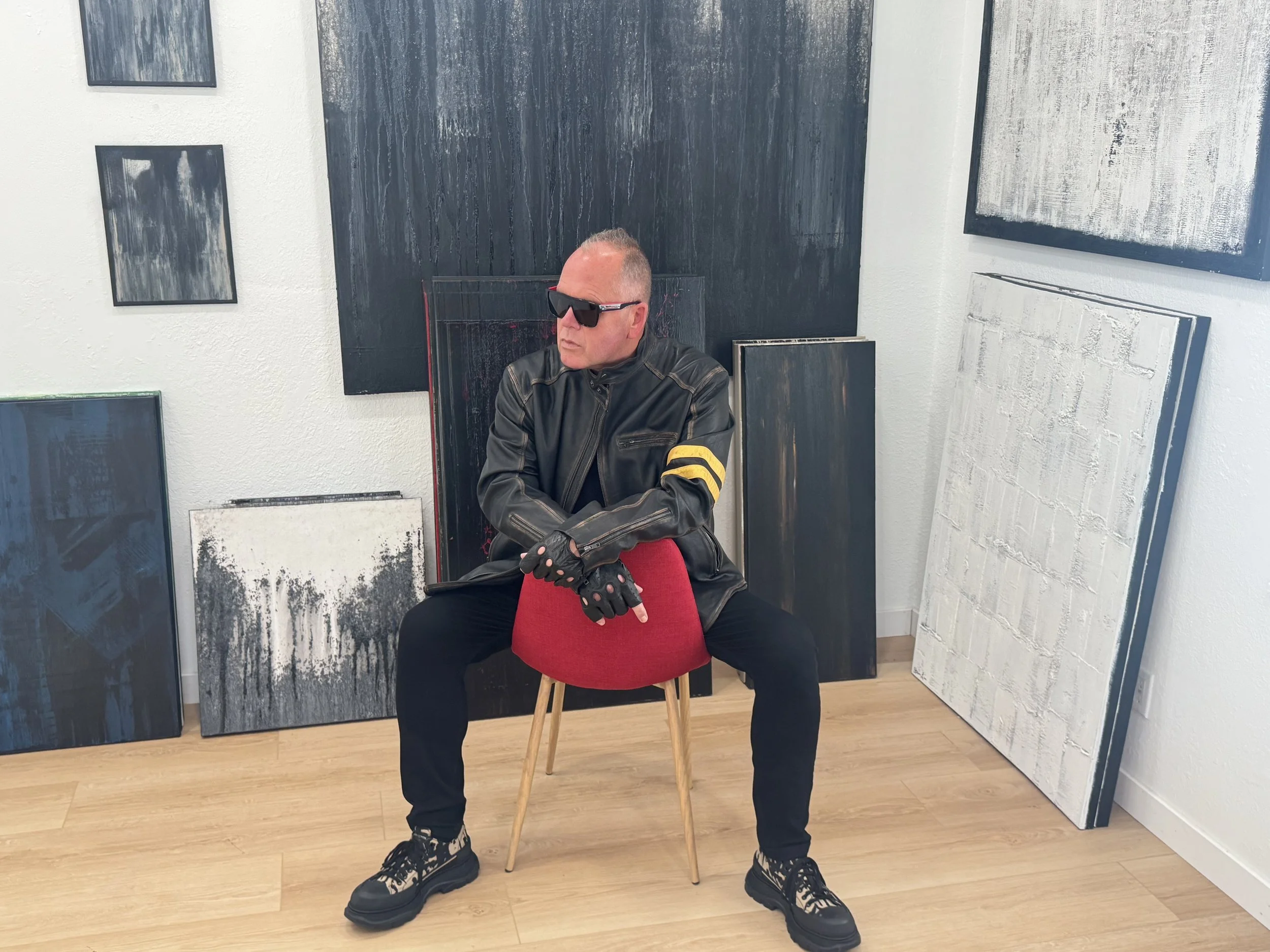
Shannon Louis is a contemporary artist whose work is guided by instinct, emotion, and a lifelong sensitivity to space. His paintings emerge from movement rather than planning, allowing texture and energy to lead the process. What results are works that feel lived-in, honest, and deeply personal — pieces that anchor a room and invite reflection.
You’ve said creativity was part of you long before painting. What did that look like growing up?
“I was always infatuated with new homes. Model homes, hotels, spaces that felt finished and intentional. I didn’t just walk through them — I studied them. I paid attention to how everything flowed, how beauty and structure worked together. Even as a kid, I wanted to design hotels or model homes. I didn’t know the language for it then, but I was always searching for perfection and beauty in space.
There was this emptiness I felt — creatively. Like something was missing, and I wanted to fill it with something beautiful.”
Did you always see yourself becoming an artist?
“No. Not at all.
That path wasn’t really encouraged. My father pushed me toward a career that felt more secure. Being an artist didn’t feel like it had a future, so I listened. I did what I was supposed to do. I built a life that made sense on paper.
I lived a life that doesn’t really need to be explained.
It wasn’t easy, but I lived it the best way I could.”
So how did art actually enter your life?
“Out of necessity, honestly.
At a certain point, I needed to step up and do everything I could to make extra money. That’s when people started asking me for help. Friends would say, “Can you help organize my house?” or “Can you help with the interior design?” or “Can you help paint?”
I said yes because helping came naturally to me. I understood space. I understood balance. People trusted me with their homes.
One day, after helping paint a house, there was extra paint left over. I remember looking at it and thinking, why not? I used what was left and created something to hang on the wall.
That moment changed everything.”
What did that first piece mean to you?
“It wasn’t about making art. It was about expression.
I didn’t overthink it. I didn’t plan it. I just moved.
When we hung it up, I remember feeling something click. That creative emptiness I’d carried for so long finally felt acknowledged. I didn’t name it then, but looking back, that was the beginning.”
Your process today feels very instinctive. Can you describe what happens when you paint?
“When I paint, I don’t plan.
I don’t sketch.
I don’t think about the outcome.
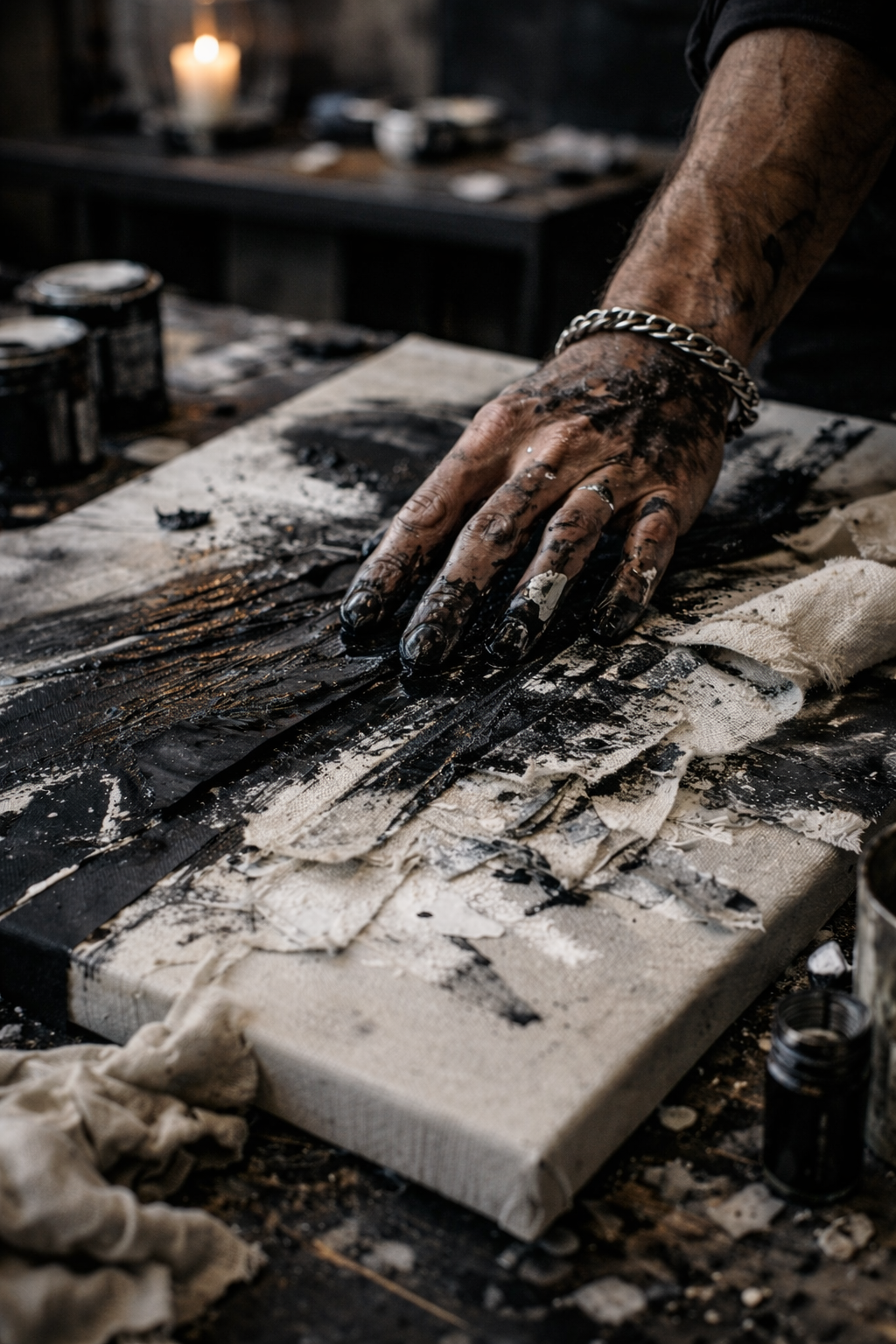
Something takes over. My hands move before my thoughts do. I pour all of my energy into the canvas. While I’m painting, I don’t notice anything else around me. No time, no noise, no distractions.
When I’m done, I feel exhausted — not tired, but emptied. Like the piece took everything it needed from me.”
Collectors often talk about hidden imagery in your work. Is that intentional?
“No. And that’s the interesting part.
I never see it first.
Other people point it out to me. They’ll say, “Do you see this face?” or “Do you see this figure?” And I honestly don’t — not until they show me.
Those things appear on their own. I think the work knows more than I do sometimes.”
What do you hope people feel when they live with your work?
“I don’t want to tell people what to feel.
I want them to feel something.
Calm. Energy. Reflection. Connection.
Whatever they’re carrying into the room, I want the work to meet them there.
My art isn’t about perfection anymore.
It’s about honesty.”
How do you see yourself now, as an artist?
“Art is where everything finally came together for me — the kid who loved beautiful spaces, the years of restraint, the need to survive, the instinct to help others.
I didn’t plan this path.
But it feels like the truest version of myself.
This isn’t something I do.
It’s who I am.”